
Sample report, invented property
Score your own house
Home hardening report, methodology v1.3
Sample report
25 August 2026
1042 Emberline Ridge Road
Nevada City, CA 95959, Nevada County
This address is invented for demonstration. There is no such property, and nothing on this page describes a real home. The photographs are the product's own illustrative artwork, not a customer's.
Home Hardening Score
Substantially Protected, grade B
Range 77 to 89. This is a declared uncertainty band, and it is declared rather than calculated from a sample.
The band is a plain report of where the score lands in the agreed ranges. Nothing else moves it.
The six essentials
3 of 6 in place
The essentials never deduct points. They are listed here so what is missing and what is simply unconfirmed are both visible, and never merged into one number.
Not in place
- F1. Zone 0 clear of combustibles, the first five feet
- F2. No combustible fence or gate within five feet
Not confirmed
- E1. Attic and crawlspace vents ember-resistant
Absence of evidence is not evidence of absence. Not confirmed is not the same as missing, and it does not lower the score.
Site context, not scored
High Hazard
CAL FIRE maps this area in a High Fire Hazard Severity Zone. That is a statement about the conditions around the property, not about the house, and none of it is scored here.
Photographs, 4 of 6
Four of the six photographs were provided. Without the full set the number is held at 90, which is the highest a home can reach on answers alone.
Photographs never add points. They set how wide the range is, they can correct an answer, and a complete set lifts the number's ceiling from 90 to 100.
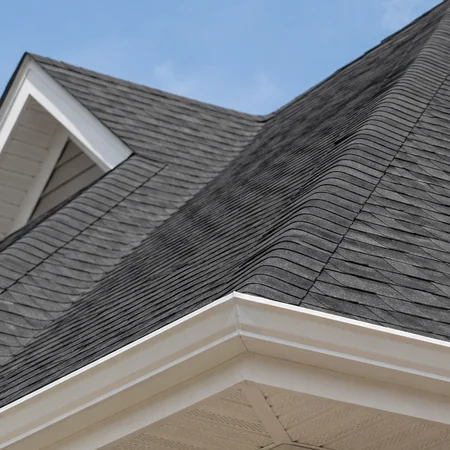
Roof covering, illustrative photograph
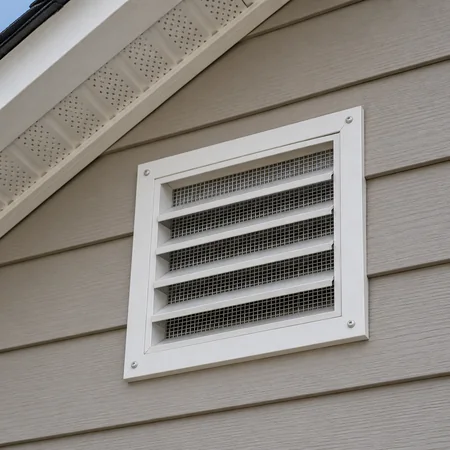
Vents, illustrative photograph
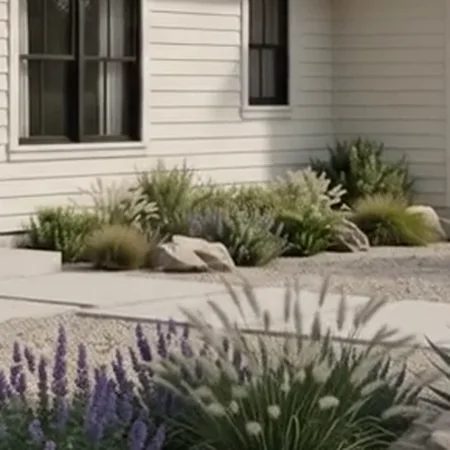
Zone 0, illustrative photograph
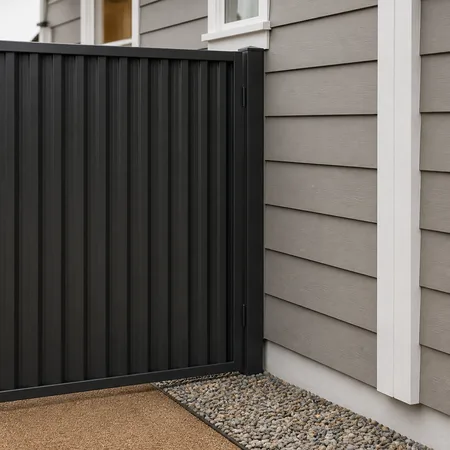
Fences and gates, illustrative photograph
The three ways a house catches fire
Ember intrusion
88%
The openings an ember can enter through. Weighted heaviest of the three.
Radiant heat
82%
What the house is wearing when a nearby fire radiates onto it.
Direct flame contact
66%
What burns at the wall and what carries flame to it.
Every measure we looked at, 16 in all
- Not confirmed
VentsEssential
Attic and crawlspace vents ember-resistant
Not sure
Ember intrusion. Source: Homeowner.
Ember-resistant vent installers in Nevada County - In place
EavesEssential
Eaves enclosed
Fully boxed in with noncombustible material
Ember intrusion. Source: Homeowner, photograph consistent.
Eave and soffit enclosure in Nevada County - In place
Roof coveringEssential
Class A fire-rated roof covering
Composition asphalt shingle, Class A
Ember intrusion. Source: Homeowner, photograph consistent.
Roofing contractors in Nevada County - In place
Roof flashing
Roof flashing and bird stopping intact
Flashing in place and gaps closed
Ember intrusion. Source: Homeowner.
Roofing contractors in Nevada County - Part way
Gutters
Gutters with noncombustible covers
Metal gutters, no covers
Ember intrusion. Source: Homeowner.
Gutter and gutter cover installers in Nevada County - In place
Roof and gutter debris
Roof and gutters clear of debris
Cleared within the last three months
Ember intrusion. Source: Homeowner.
Gutter and gutter cover installers in Nevada County - In place
Under the house
Crawlspace and under-floor clear of stored combustibles
Nothing stored underneath
Ember intrusion. Source: Homeowner.
- Part way
Under the deck
Under-deck area clear of vegetation and debris
Mostly clear, some stored items
Ember intrusion. Source: Homeowner.
- In place
Windows
Multi-pane windows or functional shutters
Dual pane throughout, one pane tempered
Radiant heat. Source: Homeowner.
Window and shutter installers in Nevada County - Part way
Wall material
Exterior wall material ignition-resistant
Stucco on most walls, wood siding on one elevation
Radiant heat. Source: Homeowner, photograph consistent.
Siding and wall base in Nevada County - Not in place
Structures within thirty feet
No combustible structures within thirty feet
A wooden shed stands about twenty feet from the house
Radiant heat. Source: Homeowner.
Outbuilding and shed relocation in Nevada County - Not in place
Zone 0 clear of combustiblesEssential
Zone 0 clear of combustibles, the first five feet
Bark mulch and shrubs against the wall on two sides
Direct flame contact. Source: Homeowner, photograph consistent.
Defensible space and vegetation crews in Nevada County - Not in place
Fences and gatesEssential
No combustible fence or gate within five feet
Wooden fence meets the house at the side gate
Direct flame contact. Source: Homeowner, photograph consistent.
- In place
Base clearance at wallEssential
Six inches noncombustible vertical clearance at the wall base
Six inches or more of concrete at the base
Direct flame contact. Source: Homeowner.
- Part way
Deck surface
Deck or porch surface noncombustible or ignition-resistant
Composite boards, listing not confirmed
Direct flame contact. Source: Homeowner.
Deck contractors in Nevada County - In place
Where the deck meets the wall
Deck-to-wall junction sealed and clear
Junction sealed and free of debris
Direct flame contact. Source: Homeowner.
Deck contractors in Nevada County
What to do next
Listed in the order they are worth doing. Cost bands are ordinal planning ranges, not quotations.
1. Clear the first five feet around the house
Lowest cost band
This is one of the six essentials, and it is one the report currently records as not in place.
Direct flame contact. Needs doing again each season.
2. Replace the last five feet of wooden fence where it meets the wall
Low cost band
Another essential recorded as not in place. A metal section at the house end is the usual fix.
Direct flame contact
3. Confirm what the attic and crawlspace vents are
Lowest cost band
Recorded as not confirmed rather than missing. Not knowing does not lower the score, and it does leave an essential undisclosed.
Ember intrusion
4. Move the wooden shed further from the house
Highest cost band
A combustible structure inside thirty feet on land the homeowner controls.
Radiant heat
5. Fit noncombustible gutter covers
Moderate cost band
The gutters are metal and uncovered, so debris still collects in them.
Ember intrusion
What this score does not cover
This score reflects only the things a homeowner can change. Structure separation, neighbourhood density and the age of the home are stronger predictors of whether a house survives a wildfire than any single hardening measure, and none of them are scored here, because none of them are actions available to you.
It does not tell you whether a carrier will write or renew a policy, it does not predict whether a home will survive a fire, and it does not tell you what any measure is worth under a carrier's own filed rating plan. Only your carrier can tell you that.